When browsing your local bookstore, GoodReads or whatever means you use to find a new book to read, some books are sure to pop up everywhere. It's very much possible to pave the street with Hunger Games lookalikes, and I lost count of how many times I came across a reference to The Fault In Our Stars this week. While I'm not trying to discourage anyone from reading those books - cause god knows I enjoy them very much myself - there are other books out there as well, and with a sole focus on what's hip and cool right now it's easy to miss out on the rest. A while back I came across a book that I had never heard of before, but one look at it made me want to read it.
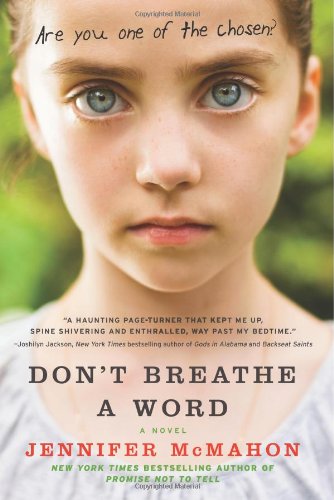
I like pretty and/or fascinating covers, but I don’t let them cloud my judgement of the book. That is, I don’t judge a book solely by its cover. I’ve seen lots of books with very pretty or interesting covers, but when I dig a little deeper, the book turns out to be one of those I wouldn’t like in a million years, so no, I don’t buy based on face value alone. When I saw this book on my boyfriend’s shelves, however, I was immediately drawn to it. Those eyes, that creepy child, it just captivated me. Seeing as it was about Fairies and stuff, I decided to give it a try cause I needed to know exactly what that cover was hiding within those pages.
On a soft summer night in Vermont, twelve-year-old Lisa went into the woods behind her house and never came out again. Before she disappeared, she told her little brother, Sam, about a door that led to a magical place where she would meet the King of the Fairies and become his queen.
Fifteen years later, Phoebe is in love with Sam, a practical, sensible man who doesn't fear the dark and doesn't have bad dreams—who, in fact, helps Phoebe ignore her own. But suddenly the couple is faced with a series of eerie, unexplained occurrences that challenge Sam's hardheaded, realistic view of the world. As they question their reality, a terrible promise Sam made years ago is revealed—a promise that could destroy them all. Let’s elaborate on the Fairy stuff. Fifteen years prior to the story, twelve-year-old Lisa went missing, kidnapped by the Fairy King to be his queen. Her brother Sam is left and turns his back to everything supernatural. When, in the present, he and his girlfriend Phoebe witness strange things, it seems Lisa is coming back and Sam’s beliefs are to be tested. Seeing as I can summarise it in about three lines, the idea is pretty simple. The execution, however, is complicated and very well done. For those who can guess how this is all going to turn out, you should become a detective or something like that (*), cause whilst on the surface very simple, what lies underneath is everything but a simple plotline. There never was a point in the story where I felt like I knew what was going on. I always had some ideas, sure, but I never had the feeling like I knew it for sure this time around. The solution to the whole disappearance was quite shocking, I think, and the actual ending was just plain weird. In hindsight, I think it should have ended with the solving of the mystery and leave the epilogue for what it was. The whole book is very well constructed as a creepy, eerie, suspenseful mystery with a supernatural flavour to it. The solution to the mystery, how disturbing it may be, does fit and just adds to the atmosphere of it all. The ending – as in the epilogue – gave me just a big "what the hell????" feeling. Perhaps it’s because it comes so unexpected (**), but to me it felt a bit forced in order to provide some sort of solid reasoning behind everyone’s actions. Perhaps some readers might have appreciated it, but for me an explanation along the lines of ‘they’re all a bunch of loons’ would have been sufficient. I thought the writing style was very fitting for this kind of story. The pacing was good and McMahon really know how to evoke a certain atmosphere. Especially the scenes who took place in the woods were written in a chilling fashion and gave me a claustrophobic feeling, even though it was out in the open. Another plus was how this book was constructed, with chapters alternating between Phoebe’s POV today, and twelve-years-old Lisa’s. Additionaly, I thought the illustrations and general lay-out of the book fitted the story very well and made the reading experience just a little nicer. My only real complaint lies with the characters. What I love about reading, is how I get to know the characters and start to care for them. Here, however, that didn’t happen. I don’t feel like I truly know who Sam, Phoebe and Lisa are, and I sure don’t care about them. It’s not that they are not interesting, cause they are, as are the other characters in this book, but they didn’t engage me enough. For the most part of the book, they felt kind of one-dimensional. At times, they sort of seemed like cardboard figures who were making their way through the setting, instead of fleshed out characters interacting with what happened around them. They do have their own distinctive voices and you can tell them apart, but with so much happening in this book, they change very little and at times, they can’t get their emotions to come across towards the reader, I think. For me, that made the difference between liking and really liking this book. After having read Don’t Breathe A Word, I can conclude that this book does give you what the cover evokes. It is a captivating, strange and by times disturbing story with a great opening line (***). Even though the characters aren’t what I would want them to be, I still enjoyed this book and if I should come across another of Jennifer McMahon’s books, I’ll sure be tempted to read it.  Fancy a walk through the woods yourself? Meet the fairies here!
(*) Or perhaps I just should not become a detective. My trackrecord for figuring out the plot is depressingly low.
(**) At least to me, but we've already covered that subject.
(***) "Hotter than hot, no air-conditioning,, sweat pouring down in rivers, the Magic Fingers motel bed vibrating beneath her, Mr. Ice Cream doing his thing above." I don't know about you, but I'm immediately like 'Hello?!'. This first line is in no way representative of the rest of the rest of the book, but it's a nice way to draw your readers in.
|

Posts tonen met het label 3Flames. Alle posts tonen
Posts tonen met het label 3Flames. Alle posts tonen
dinsdag 5 augustus 2014
Review: Jennifer McMahon, Don't Breathe A Word

zaterdag 8 maart 2014
Review: Daniel Abraham, The Dragon's Path (The Dagger And The Coin, #1)
As I have mentioned in last week's #FridayReads-post, and plainly visible on my GoodReads page, I am currently reading The King's Blood by Daniel Abraham. Since I'll be finishing it one of these days and will review it, I thought it useful to post my review on the first book in the series here, so to get a complete set of reviews in the end. This particular review is some two years old, I guess.
 Expectation is a peculiar thing. Whenever I start a new book, I have some expectations of it, according to the specific (sub)genre, the author, reviews etc. The trick, however, is to not let your expectations get to high because it can ruin a book. I’ve mentioned in a previous review that starting with nigh to none expectations can make you really enjoy a book. The opposite, on the other hand, is also true. When you expect more than the book is able to deliver, it turns out a little disappointing. That is exactly my experience with The Dragon’s Path. I wanted it to be as amazing as your average George R.R. Martin, but it couldn’t quite deliver.
All paths lead to war...
Marcus' hero days are behind him. He knows too well that even the smallest war still means somebody's death. When his men are impressed into a doomed army, staying out of a battle he wants no part of requires some unorthodox steps.
Cithrin is an orphan, ward of a banking house. Her job is to smuggle a nation's wealth across a war zone, hiding the gold from both sides. She knows the secret life of commerce like a second language, but the strategies of trade will not defend her from swords.
Geder, sole scion of a noble house, has more interest in philosophy than in swordplay. A poor excuse for a soldier, he is a pawn in these games. No one can predict what he will become.
Falling pebbles can start a landslide. A spat between the Free Cities and the Severed Throne is spiraling out of control. A new player rises from the depths of history, fanning the flames that will sweep the entire region onto The Dragon's Path-the path to war.
The fact that it wasn’t able to be another Martinish book (*), wasn’t the only problem I had with this book, however. As for the plot, I still can’t really tell what the book is about. I don’t mind not knowing where a book is going, as long as it is going somewhere and here, I didn’t feel like it was really going somewhere.
The book starts off really well though. The prologue is really interesting and sparked my attention. The character who was introduced there, however, doesn’t return until the epilogue, as well as reference to the fascinating trick he pulled in the first couple of pages. Granted, he does make an appearance, but it’s not until the second half of the book that you really know who he is and the cool spidery thing he did isn’t mentioned once (**). I can’t help but feel a bit cheated because of that. I was really looking forward to that particular character and his weirdness but I just never got it. What we do get, is four story arcs who are represented by four different POV’s. At first, I was really interested in them all, but after some chapters, it all slowed down to a terrible pace and I became frustrated. Frustrated because what I was reading wasn’t as interesting as the prologue and frustrated because it was all so slo-o-o-ow. The things that did happen throughout the book weren’t really interesting and it wasn’t until the end that the pace started to pick up and things became slightly more interesting. It would have been better, for me, if these events were placed within a wider frame. The main part of this book consists of worldbuilding, but even though there is a huge amount of it, it doesn’t suffice to give me a proper understanding of what’s at stake. Why should I care who wins and who’s on the Severed Throne? I didn’t know and still don’t. Because of that, I felt disconnected from what’s going on. While things got more interesting towards the end, I have to say though that the way towards the conclusion felt a bit too easy for me. I like the concept and find it intriguing, but it wasn’t that well put too use. I felt like I missed some suspense and excitement simply because of this.
Luckily, the characters were very good. We get introduced to four very different characters, all with their own little storyline and there are some connections between them. Out of the four, I found Dawson’s the least interesting and by times tedious to get through. His was all about the intrigue at the court and whilst that an sich is really fascinating to read about, his vision on it wasn’t. It would have been way more interesting if Clara, his wife, was POV instead of Dawson himself. Clara is seemingly superficial, but she is cunning and shrewd. It isn’t until she becomes point of view towards the end, that I got interested in what’s going on there. Geder is a bit of a mixed bag for me. At the start, he is another Samwell Tarly. Because of the whole underdogvibe he’s got going on, I kind of liked him. However, a good part in the book, he made some decisions that made me dislike him, a lot. He might have had a big ass, but now he’s become one. That’s not to say his story gets uninteresting, cause it really doesn’t and I’m looking forward to see what future books hold in store for him. Cithrin and Marcus were by far the most interesting. I really liked their individual as well as their mutual story and the connection between them and those around. I liked the evolution of Cithrin from an insecure girl to a cunning – not in the way it is used in the book, mind – woman. Along with them, the addition of the group of actors was lovely. They really provided some comic relief, albeit in a more subtle way, that was really necessary for the novel.
As far as the writing style is concerned, I don’t have anything to complain about. Really strong writing, able to engage and make you care. It’s not too elaborate nor difficult, so that was all good.
Because of those things concerning the plot that irked me, I feel like I’ve read a really long introduction to what seems like a really interesting series. I felt like this book was really promising, but couldn’t quite deliver. It did build up to something, though I don’t know to what and I guess that’s something that will be addressed in the second book. I was already convinced, but the epilogue made me really want to read the sequel. What I won’t do, however, is set the bar too high, cause I don’t want to end up liking the book less than I would want to, as was the case here.
Fancy walking the Dragon's Path yourself? Walk the walk here!
(**) I'll forever remember the day I put spiders and cool in one and the same sentence without the use of a verb of destruction. A day like that hasn't occured ever since.
dinsdag 4 maart 2014
Review: Marie Lu, Legend (Legend, #1)
 The vast amount of dystopian fiction that has been produced in recent years is almost unbelievable. Not all that glimmers is gold though, and while a lot of these books sound really exciting, few are really worth the time, I think. Which means that I’m picky when it comes to buying these books cause I’m not an unconditional fan of the genre (*). I do like to stroll the shelves in the library and pick them up for a read. Just for – free – fun (**). Thus so it happened that I stumbled upon Legend and it got me intrigued, cause I’ve heard a lot of good things
about this book upon its release some years past (***). It’s about time to see
what the fuss is all about.
The vast amount of dystopian fiction that has been produced in recent years is almost unbelievable. Not all that glimmers is gold though, and while a lot of these books sound really exciting, few are really worth the time, I think. Which means that I’m picky when it comes to buying these books cause I’m not an unconditional fan of the genre (*). I do like to stroll the shelves in the library and pick them up for a read. Just for – free – fun (**). Thus so it happened that I stumbled upon Legend and it got me intrigued, cause I’ve heard a lot of good things
about this book upon its release some years past (***). It’s about time to see
what the fuss is all about.
What was once the western United States is now home to the Republic, a nation perpetually at war with its neighbors. Born into an elite family in one of the Republic's wealthiest districts, fifteen-year-old June is a prodigy being groomed for success in the Republic's highest military circles.
Born into the slums, fifteen-year-old Day is the country's most wanted criminal. But his motives may not be as malicious as they seem.
From very different worlds, June and Day have no reason to cross paths - until the day June's brother, Metias, is murdered and Day becomes the prime suspect. Caught in the ultimate game of cat and mouse, Day is in a race for his family's survival, while June seeks to avenge Metias's death.
But in a shocking turn of events, the two uncover the truth of what has really brought them together, and the sinister lengths their country will go to keep its secrets.
As is the case with most dystopian novels, the plot is actually nice, although not terribly original nor exciting. The idea behind the military society and the plague-subplot makes for a good read. The worldbuilding, however, isn’t what it should be. There is constant mention of the Republic and the Colonies, but it’s never explained who is who and why. It’s not that I want to know it all right away, but some initial worldbuilding to place the events in a bigger picture would have been nice. Now, it’s just confusing bordering on messy and it's hard rooting - or even trying to sympathise or even understanding - for someone's cause if you do not know the basics of it all.
The basic premise of Legend brings us two main mysteries. First and foremost, the search for Metias’s – June’s brother – killer, and second, the truth about the plague. Sadly enough, both mysteries are solvable halfway through the book, which leaves you with two protagonists stumbling about trying to figure out what you know all along. The hints that are being dropped are so big, it’s a real effort from their side not to have seen them. The way June uncovers the truth was a bit weird and I don't know how I feel about that, though (****). The conclusion as well, was fairly predictable, but nonetheless, it was enjoyable to read. Also, while the solution is at hand and the characters have a certain amount of understanding, nothing really got solved and they just made a bigger mess of things.
Talking about messmakers, Legend is told through the perspectives of June as well as Day, and their POV’s alternate chapters. Every chapter mentions which POV you are reading from, which is a good thing seeing as there is almost no difference between June’s voice and Day’s. If it weren’t for the chapter titles, you’d have a hard time figuring out who was POV. June as well as Day are prodigies, and while there is nothing wrong with that, you’ll have to give them an edge to make your characters interesting. Unfortunately, June nor Day holds that edge and they come across as flat and utterly unbelievable. Sure, June might be a prodigy, but she’s only fifteen and being so high up the ranking just doesn’t match with the way society is structured. In the midst of all the military control and trying to contain everyone and everything – and going to horrible lengths in order to achieve it – they hand a lot of responsibility to a girl of only fifteen? Beats me. Day’s bag of tricks comes across as unbelievable as well. Climbing up the walls of buildings – with a butchered knee – in mere seconds? Sure he’s not Clark Kent or Spiderman? Another thing that struck me as bordering on the unbelievable was the romance. On a scale ranging from insta-love to a beautifully developing relationship, this one fell on the wrong side. Luckily, the romance really took the backseat here.
Despite my annoyance with the characters and the predictability of the plot, this books wasn’t all bad, mind you. In fact, I quite enjoyed reading it. It’s fast paced and exciting, and Marie Lu’s writing style is simple and clean, which keeps you reading. There is also a nice balance between exposition and the more action-packed scenes and the exposition was limited so the story never dragged on and on.
Legend has gotten some hype a while back - and now still, with the release of the final book - and while I’m not convinced that the hype was totally justified, I had quite a good time reading this book. While it is predictable and the characters don’t interest all that much, the stuff that was going on was enough to keep me reading. If I stumble across the sequels in the library, I’ll pick them up, cause I do want to know what happens next. If you want a light read between some big tomes and you've enjoyed The Hunger Games, you can’t go wrong with Legend.
All taken into account, I'd give Legend 2.5 flames, but since I don't do halfsies, I'll round it up to three. There you go!
All you Legendary people can buy your own copy, right here and support us while you're at it.
(*) And I also don't fancy having a whole shelf full of Hunger Games knock-off's.
(**) The motivation behind me reading books that aren't particularly good is still a mystery to me. They are enjoyable, I'll give them that, but isn't enjoyable AND good a better way of wasting my time?
(***) Which says absolutely nothing. I only wish half these books were half as good as The Hunger Games...
(****) Also, kudos to her for having such good eyes, cause you need an excellent pair for discovering grease on the handle of a knife - which has also blood on it, which makes it supertricky and not something for kids below 15 - on a photo you've just declared blurry and all but good for the case, and linking that same grease to a person who happened to have a smear on his body. On a military basis with lots of weapons and other machinery, no one but that person is so clumsy with the grease. Who needs Sherlock?
(****) Also, kudos to her for having such good eyes, cause you need an excellent pair for discovering grease on the handle of a knife - which has also blood on it, which makes it supertricky and not something for kids below 15 - on a photo you've just declared blurry and all but good for the case, and linking that same grease to a person who happened to have a smear on his body. On a military basis with lots of weapons and other machinery, no one but that person is so clumsy with the grease. Who needs Sherlock?
maandag 26 augustus 2013
Review: Juliet Marillier, Heart's Blood
 When I first found out about Juliet Marillier, I was amazed at how she was able to take well-known tales and put her own – Celtic – spin on them to weave compelling stories that touch your heart. That was way before I discovered the online book community and the dominance of young adult fiction therein, where retellings of everything older than the past decade – I jest – are to be found. I couldn’t be bothered by those numerous retellings, but for Juliet Marillier, I always take some time apart. This particular novel of hers, however, inspired by Beauty & the Beast, didn’t cut it completely.
Whistling Tor is a place of secrets, a mysterious wooded hill housing the crumbling fortress belonging to Anluan - a chieftain whose name is spoken throughout the region in tones of revulsion and bitterness. A curse lies over Anluan's family and his people, and the woods hold a perilous force whose every whisper threatens doom.
Then the young scribe Caitrin appears in Anluan's garden, admiring the rare plant know as heart's blood. Retained to sort through entangled family documents, Caitrin brings about unexpected changes in the Household, casting a hopeful light against the despairing shadows.
But even as Caitrin brings solace to Anluan, and the promise of something more between them, he remains in thrall to the darkness surrounding Whistling Tor. To free Anluan's burdened soul, Caitrin must unravel the web of sorcery woven by his ancestors before it claims his life - and their love.
In my introduction, I already pointed out that this novel is based on the well-known story of the Beauty and the Beast. However, if I hadn’t known that beforehand, I probably wouldn’t have noticed it all too soon. See, while the general flow of the storyline is reminiscent of the fairy tale, Juliet Marillier really made it her own and created an almost new Celtic tale that hints at the fairy tale. This is perhaps the strongest asset of this novel, because with retellings, you risk repetition since your readers already know what’s to come. Here, however, whilst I was able to pinpoint some parallels in terms of who was who, the storyline was not all that the same so it felt like a whole new story to me, rather than a retelling. For example the role played by mirrors. In the fairy tale – at least the Disney version of it – the Beast gets an enchanted mirror to see the world outside, the world he’ll never visit because of his affliction. The mirrors at Whistling Tor, however, are far creepier than that. They might show things you wish you hadn’t seen… Not only the – slightly eerie – Celtic spin on things, but the nature of the curse as well was very refreshing and interesting and I really appreciated the way things ended. Goes to show that it doesn’t have to be all well to end well.
While being a far cry from the original tale definitely being a pro here, the plot also has its lesser qualities in its slow pace and predictability. As for the former, it just takes too long for things to get going. It’s not that it’s not interesting at all, but because things developed so slowly, it was too easy to put the book aside, which I did quite often. Also, pretty early on, you get a good hunch at how things will eventually pan out and while I kept hoping for a surprising twist to take my breath away, it never came. I couldn’t help but feel a bit disappointed because of this.
While being a far cry from the original tale definitely being a pro here, the plot also has its lesser qualities in its slow pace and predictability. As for the former, it just takes too long for things to get going. It’s not that it’s not interesting at all, but because things developed so slowly, it was too easy to put the book aside, which I did quite often. Also, pretty early on, you get a good hunch at how things will eventually pan out and while I kept hoping for a surprising twist to take my breath away, it never came. I couldn’t help but feel a bit disappointed because of this.
The characters that inhabit Heart’s Blood are very interesting to say the least, but most of them failed at engaging me. Most of the characters seem to have a very troubled backstory and I would have loved to have explored those, but apart from some hints now and then, these are left untouched, which I felt was wasted potential. It might have been helpful to add these stories just to break the pace a bit. One backstory that does get explored, is Caitrin’s, and here I have to take my virtual hat off to Juliet Marillier. It seems like all we read about nowadays are ‘strong female characters’(*) who have or have to overcome their insecurities and do so with ease and grace. What I loved about Caitrin is how she is everything but that. She as well has a troubled past, and her past made her how she is today. The way Marillier made Caitrin’s past echo throughout her stay at Whistling Tor and the way she rose above that, were a pleasure to read. She may not be the stereotypical female character with the gutsy kick-all attitude, but she surely is all that in her own way.
Which brings me to probably the main reason why I didn’t like this book as much as Sevenwaters, and that would be the writing. See, I loved Marillier’s prose in Daughter Of The Forest, for it was lush, poetic and very descriptive. The writing in Heart’s Blood is not that very different, but it just didn’t work as well for me. Rather than very, it was overly descriptive and I found there to be too many words for what was being said and less would probably have been more in this case. This made the already slow plot almost dragging around halfway through. As a result, it felt like it took me hours to turn the page and thus made me put the book down way more that I would have liked to.
All in all, I did like Heart’s Blood, but not as much as other offerings from the author. Still, as far as retellings go, I think this once again proves that Juliet Marillier knows her craft when it comes to handling a well-known story in order to make something interesting out of it.
Which brings me to probably the main reason why I didn’t like this book as much as Sevenwaters, and that would be the writing. See, I loved Marillier’s prose in Daughter Of The Forest, for it was lush, poetic and very descriptive. The writing in Heart’s Blood is not that very different, but it just didn’t work as well for me. Rather than very, it was overly descriptive and I found there to be too many words for what was being said and less would probably have been more in this case. This made the already slow plot almost dragging around halfway through. As a result, it felt like it took me hours to turn the page and thus made me put the book down way more that I would have liked to.
All in all, I did like Heart’s Blood, but not as much as other offerings from the author. Still, as far as retellings go, I think this once again proves that Juliet Marillier knows her craft when it comes to handling a well-known story in order to make something interesting out of it.
Let yourself get swept away by a love that surpasses time and get your copy now!
* This article raises some valid points concerning the omnipresence of SFC's. If you're interested, it's worth your time.
Review: Charlaine Harris, Dead Until Dark + True Blood S1
 Looking at my track record when it comes to reading, I think it’s fair to say that it’s a little miracle when I read a book within the year of its release. In fact, I am so terribly behind on numerous series and other books, that I’m probably allowed to get my own charity. One of those series that have been lingering around since back when, is Charlaine Harris’s Sookie Stackhouse series – along with it the True Blood tv-series, because one does not see the movie or series before reading the book (*). With the sixth – already – season airing this past summer and since I had a road trip planned with lots of small free moments for reading, Dead Until Dark was the ideal choice.
Sookie Stackhouse is just a small-time cocktail waitress in small-town Louisiana. Until the vampire of her dreams walks into her life - and one of her coworkers checks out.... Maybe having a vampire for a boyfriend isn't such a bright idea.
Plotwise, there isn’t much more to the novel than what it says on the tin. It’s a murder mystery slash romance novel, and a pretty straightforward one at that. Everything you can expect from a novel like this is present, including the police who are clueless and randomly picking on the wrong suspect, some danger and in the end the heroine to save the day. In fact, it’s fair to say that the romance takes first chair and the murder mystery is just along for the ride. Throughout the story, there are none whatsoever clues to who might have killed those women and when the murderer is revealed, it felt like he was the unlucky one who picked the shortest straw in a kids game. It felt quite random without the intentions and backstory behind the murders being revealed after he was caught.
More central to the whole story, was the relationship between Sookie and Bill. I’m not one for instalove – and this nearly is – but Sookie and her naïve attraction and devotion towards Bill are just so endearing, that I don’t mind. Her almost childlike contemplation concerning a vampire’s ability to get an erection and produce semen, as well as other sexual ponderings, are silly and borderline hilarious, that I can’t find it in me to frown upon it. It’s only when they go on-off-on again for the what seems umpteenth time, that things get just a little tedious. Seeing as the spine markets these books as Fantasy/Mystery, the true nature of Dead Until Dark might rub some readers the wrong way. I had a gut feeling of where these books were headed – reading it years after publication might have helped me there – so I actually enjoyed the simple and frivolous plot, even though a twist or two (**) might have been welcome.
Dead Until Dark hosts a bunch of characters, but only a handful are really explored. We see everything from Sookie’s point of view, which makes her the most developed of characters and I really liked her. There is something sweet and endearing about her and she’s just so happy and positive most of the time, that it tends to affect the reader in a positive way as well. Apart from Sookie herself, Sam, Bill and in a lesser degree Gran and Eric felt like a character with their own voice. As for the rest, they all felt alike – cardboard, that is – and only their names separated one from the other, if they speak at all. I do know that books like this one don’t tend to give a lot of space for developing secondary and tertiary characters, but even Sam and Bill fell a bit flat at times, so it feels like a wasted opportunity to me.
The writing is more or less what one can expect from the genre. It’s not particularly good writing – perhaps a bit forced at times – but it’s not bad either, it’s enjoyable enough to keep reading. More important here, is that it fits the book. Charlaine Harris wrote a fun, light story and in terms of her writing she isn’t pretending otherwise and serves what you bargained for: a fun and quick read. One thing that I do regret here, though, is the setting or rather lack thereof. The series is officially titled ‘Southern Vampire’ and is set in Louisiana, but it could as well have been rural L.A. or NY for that matter. I missed some real Southern accents here that I did encounter in other novels, just to make the setting feel more real and differentiate it from the pack.
In sum, I actually enjoyed Dead Until Dark, perhaps even more so that I imagined beforehand. I do am glad to own the cheapest edition possible and neither do I regret not reading this way earlier, but I will return to Bon Temps and I will do so with a smile on my face.

Fall for Sookie and Bill by getting your own copy here!
* There are some things I'd like to say re: this ongoing debate, so expect a post about this in the near future.
* There are some things I'd like to say re: this ongoing debate, so expect a post about this in the near future.
** Apart from the ones in Sookie's knickers, that is.

Soon after finishing Dead Until Dark, I started watching the first season of True Blood, which is based on the first book in the series. I have already seen numerous book adaptations and even though I keep the book and the adaptation as much as possible separated, I can't help but rule in favour of one side of the other. Most of the times, I rule in favour of the book, but True Blood is a notable exception. As mentioned above, I did like the book, but the series gave the story some extra punch, mostly because of the characters.
The plot didn't really change a lot. Because the series isn't stuck in Sookie's head as is the novel, it makes for some leeway and enables the exploring of the secondary characters. The main plot, however, remains untouched in such that it isn't until the penultimate episode that the audience can figure out whodunnit. The laying out of new plotlines for the second season was a nice extra touch as well. It takes away some focus from the main plotline - which the viewer has figured out in the one but last episode - and thus keeping the end of the season exciting and non-void.
The characters, however, did get a serious boost. If you like book-Sookie, you will love serie-Sookie. I know I do. The same goes for Bill and Sam. Also, contrary to the book, the secondary characters are discernable and - perhaps more important - memorable. Lafayette, the cook who gets to utter one miserable line in the novel, becomes perhaps one of the more memorable characters on the show and the addition of his cousin Tara might have been the second best change to the characters - with Lafayette being the best.
Perhaps what I missed most in the book, was that Southern touch, which True Blood nailed with the set, intro and most of all, the characters' accents. It all contributes to a great atmosphere that oozes the South and gives it character.
It might be raunchy at times, and you might not want to watch it with your parents around, but the first season of True Blood was bloody delicious and made for a great adaptation of a fun little book.
Abonneren op:
Posts (Atom)